Plant Care
Peonies
7 min read
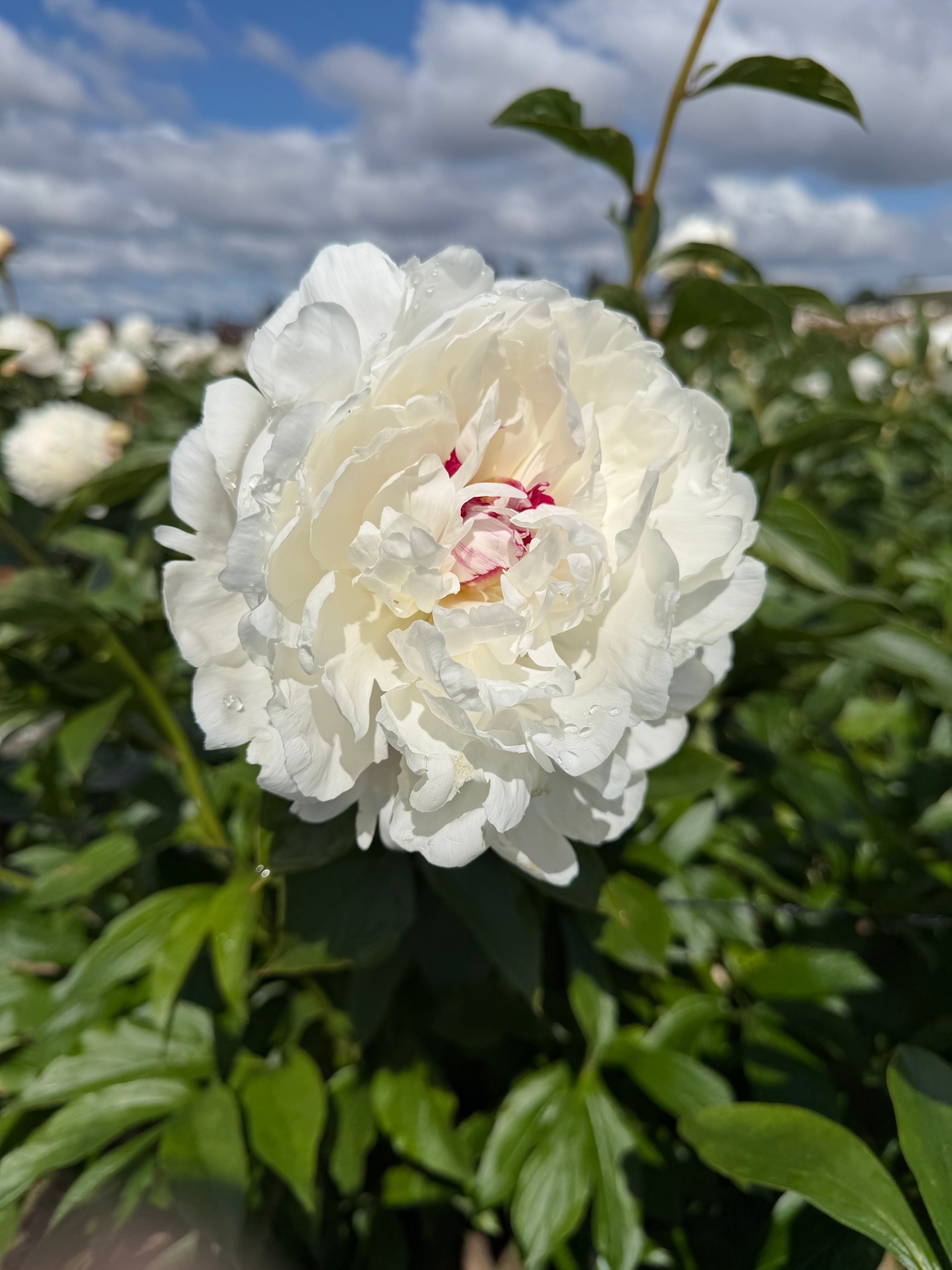
A well-sited peony will outlive the gardener who plants it. The trade-off is patience — they take two to three years to settle in before producing the armloads of bloom they're known for. The good news: once established, they ask for almost nothing.
Planting
Plant bare-root peony divisions in early fall — September through October in most of the country — when the soil is still warm but the air has cooled. Fall planting gives roots six to eight weeks to establish before dormancy.
Choose a permanent spot in full sun (minimum 6 hours, ideally 8) with rich, well-drained soil. Peonies resent being moved, so think carefully before placing them.
- Dig a hole 18 inches deep and 18 inches across.
- Amend with a generous shovelful of compost and a half cup of bone meal in the bottom third of the hole.
- Position the divisions so the pink growth eyes are no more than 1–2 inches below the final soil surface. Planting too deep is the single most common reason peonies fail to bloom.
- Space plants 3–4 feet apart to allow air circulation and mature spread.
- Water in well and mulch lightly with 1 inch of compost — never bury the crown.
Watering
Peonies are drought-tolerant once established but appreciate deep weekly watering during their active growth period from emergence through bloom. Cut back to natural rainfall after midsummer to discourage botrytis.

Fertilizing
Peonies are light feeders. Too much nitrogen produces lush foliage and weak stems with few blooms.
- Top-dress with a 1-inch layer of finished compost each spring just as shoots emerge.
- Once a year, in early spring, side-dress with a half cup of low-nitrogen organic fertilizer (something like 3-5-5 or 4-8-8).
- Skip feeding the first season after planting — let the roots focus on establishment.
Support and Disbudding
Most herbaceous peonies benefit from support — grow-through grids placed in early spring before foliage gets tall work beautifully and disappear into the leaves.
For larger cut-flower blooms, disbud by removing the two side buds on each stem when they're pea-sized, leaving the terminal bud to develop fully. For garden display, leave all buds and enjoy the longer succession of smaller blooms.
Cutting
Cut peonies for the vase at the 'marshmallow' stage — when the bud feels soft like a marshmallow but hasn't opened. Cut in the cool morning, strip lower leaves, and place immediately in cool water. Stored dry in a refrigerator wrapped in paper, marshmallow-stage stems can hold for up to two weeks before being brought into warm water to open.
Fall Cleanup and Disease Prevention
After the first hard frost blackens the foliage, cut all stems to the ground and remove the debris from the garden — do not compost it. Peony foliage harbors botrytis and other fungal spores that overwinter and re-infect in spring. A clean fall cut is the single most important disease-prevention step.
Division
Mature peonies (10+ years) can be divided in early fall if you want more plants, but they don't require it to perform. Lift the entire clump, hose off the soil, and cut into divisions with 3–5 eyes each using a clean sharp knife. Replant immediately at the proper depth.
Keep reading
More care guides.
Care Guide
Garden Roses
A complete guide to planting, feeding, and pruning fragrant repeat-blooming garden roses.
Care Guide
Dahlias
From spring planting through fall lifting and winter storage — the full dahlia year on the farm.
Care Guide
Fall Tulip Bulbs
Planting, chilling, and aftercare for double tulips and specialty bulbs — from fall ground-in through spring bloom.