David Austin® Roses
The Making of the English Rose: David Austin’s Breeding Story
October 20, 2026 · 3 min read
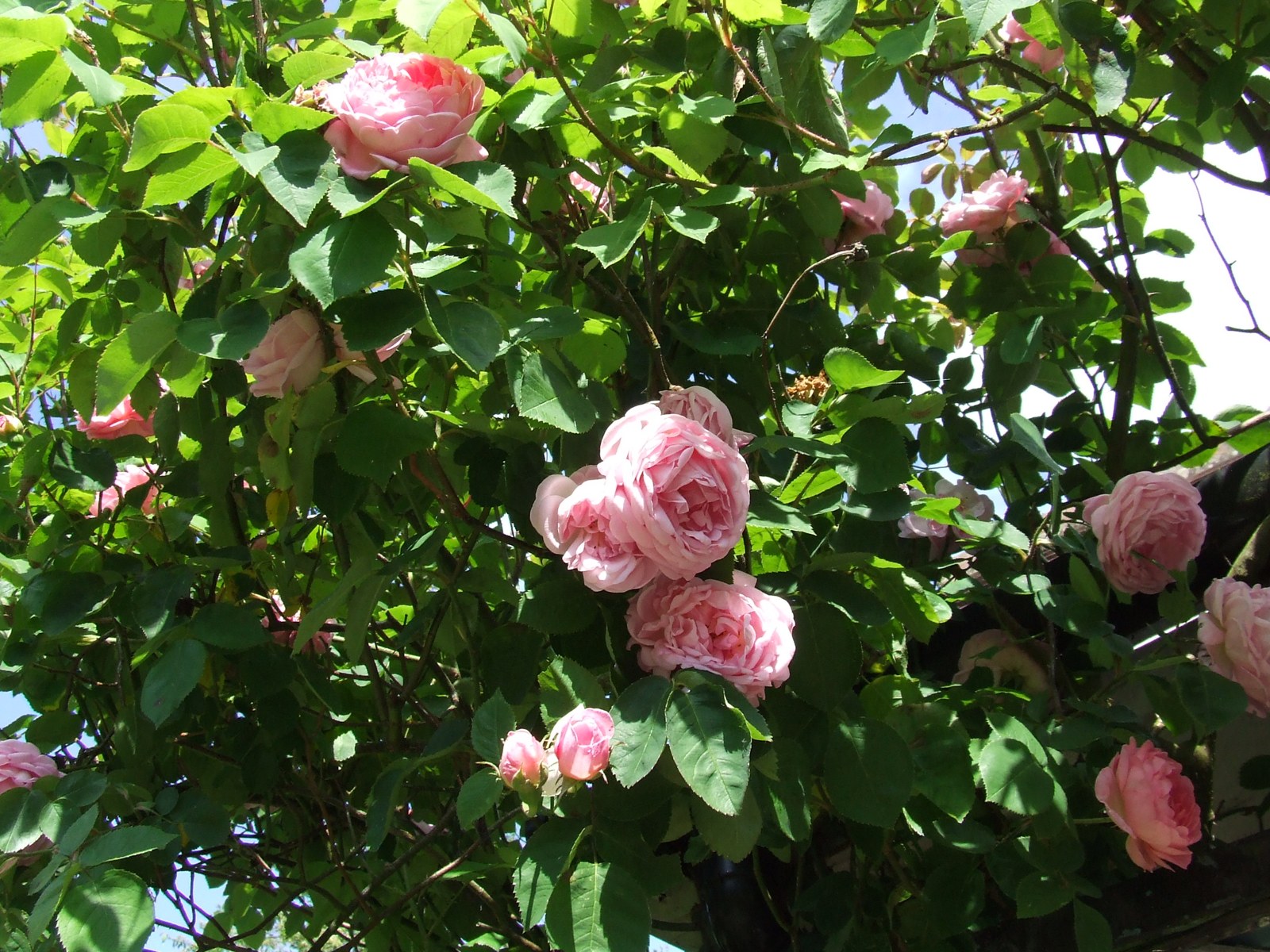
Photo: Libby norman / Wikimedia Commons · CC BY-SA 3.0Cropped for display.
The English rose began with an idea that sounds simple until you try to breed it: keep the beauty of an old rose, but give it more of the season. Keep the fragrance. Keep the deeply cupped flowers. Then bring those qualities together with the repeat flowering associated with modern roses.
David Austin did not invent beautiful roses, or fragrant ones. His contribution was to pursue a particular combination with extraordinary persistence. The result became a recognizable garden language: abundant petals, soft or richly saturated colors, and shrubs that could belong among perennials rather than stand apart from them.
The qualities he wanted to bring together
Many old garden roses flower in one generous early-season display. Modern rose breeding offered repeat flowering and a broader palette. Austin’s ambition was not to replace one tradition with the other, but to combine their strengths. The rose had to be more than a lovely individual bloom; its growth, fragrance and performance as a garden plant mattered too.
That distinction still helps when choosing a variety today. A photograph shows petals, but a garden lives with the whole plant: its branches, foliage, response to weather and ability to flower again.
Constance Spry: an important beginning
Introduced in 1961, Constance Spry is described by the breeder as the original English rose. Its large, mid-pink flowers and strong fragrance expressed the old-rose romance Austin was pursuing. It was named for the influential flower arranger Constance Spry.
It also reveals why this story is a progression rather than a single breakthrough: Constance Spry flowers once, not repeatedly. The first English rose did not arrive with every quality that later became associated with the group. It was a beginning, and later breeding continued the work.
We show it here as a historical example, not as a variety currently offered in Cloverdale’s collection.
Why breeding takes years
The breeder’s programme describes hand pollination, raising seedlings and selecting promising plants through years of trials. Crossing two attractive roses does not produce a predictable copy of their best features. Seedlings differ, and a beautiful flower alone does not establish that the plant will make a worthwhile garden rose.
David Austin® Roses describes a process that takes approximately twelve years from pollination to introduction. That long view allows breeders to evaluate plants over successive seasons rather than choosing from a single flush. Form and fragrance remain central, alongside repeat flowering, health and garden performance.
The story in the roses we offer
Munstead Wood®, introduced in 2007, carries the richness of a deep crimson old-style flower with repeat bloom. Boscobel®, introduced in 2012, offers coral-pink rosettes and myrrh fragrance. Their differences are part of the achievement: the English rose is a family of possibilities, not one fixed appearance.
The varieties in our collection are garden roses. They should not be confused with David Austin’s separate florist cut-rose range; a garden rose that is lovely in a home bouquet is not automatically a commercial florist variety.
A living tradition
The breeding programme continues beyond its founder. For a gardener, the legacy is wonderfully tangible: the chance to plant a rose with old-fashioned character without limiting its beauty to a single early-summer moment. Its romance has a practical foundation — years of patient selection behind the flower.
Explore the English rose series
- The Making of the English Rose: David Austin’s Breeding Story
- David Austin® Roses: The Stories Behind the Names
- The Best David Austin® Roses for Every Purpose
- Choosing a David Austin® Rose: A Guide to Cloverdale’s Collection
Explore Cloverdale’s David Austin® Roses collection. Availability and shipping details are shown on each product page.
Sources and further reading
David Austin® Roses: About Us; the breeding programme; Constance Spry; Munstead Wood®; Boscobel®.