David Austin® Roses
Choosing a David Austin® Rose: A Guide to Cloverdale’s Collection
October 26, 2026 · 4 min read
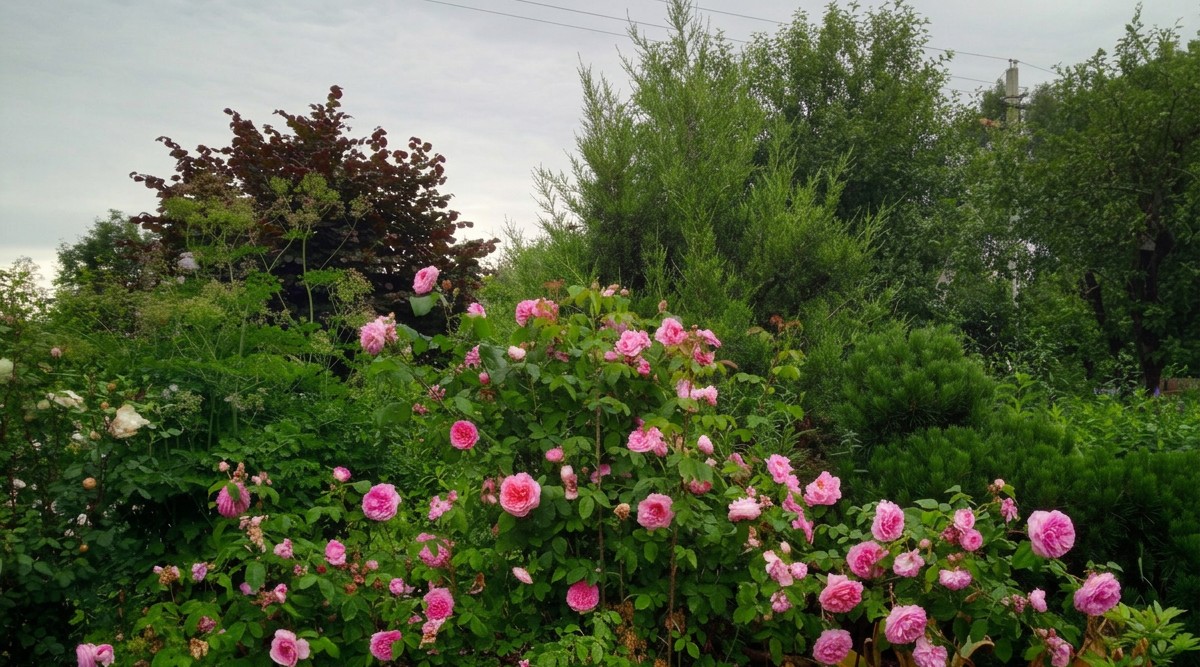
Photo: Dmitriy Konstantinov / Wikimedia Commons · CC BY-SA 4.0Stuffed animal removed with AI; cropped for display.
There is a particular kind of rose that makes a garden feel as though it has been there for years: cupped petals, a generous rosette, fragrance worth stopping for. That is the appeal of David Austin’s English roses. Their romance is easy to recognize; choosing between them takes a little more thought.
Our collection brings together ten varieties with distinctly different personalities. Rather than starting with a single “best” rose, start with the place you want to plant it. A rose for a doorway has a different job from a rose beside a garden path, and neither has to look like the one you choose for bouquets.
What is an English rose?
David Austin’s breeding work brought the beauty and fragrance of old garden roses together with modern repeat flowering. “English rose” describes this breeding tradition rather than a promise that every variety will have the same size, scent or growth habit. Our ten selections are repeat-flowering, but their flowering flushes and mature dimensions will vary with climate and care.
Start with the shape of your garden
For vertical space, consider Wollerton Old Hall® or Strawberry Hill®. These are the climbing forms we offer: they need a structure and ties, not simply a place at the back of a border. Wollerton Old Hall® suits a larger wall or arch; Strawberry Hill® gives a shorter climbing option for a doorway, pillar or smaller support.
For a border, the upright habits of Boscobel® and Queen of Sweden® make a different impression from the generous, arching growth of Golden Celebration®. Choose the silhouette as deliberately as the flower color.
Choose your color story
For pale planting schemes, Desdemona® opens from peach-pink buds to flowers that read as white with a soft pink blush. Olivia Rose Austin® offers a gentle pink, while Queen of Sweden® carries a soft pink with an apricot suggestion.
For richer pinks, look at Gertrude Jekyll® and Princess Alexandra of Kent™. Boscobel® brings coral-pink warmth. Golden Celebration® adds a rich yellow, and Munstead Wood® supplies a deep crimson that matures toward purple-red. That darker note can anchor a bed otherwise filled with pale flowers.
Let fragrance be the tie-breaker
Gertrude Jekyll® is known for strong Old Rose fragrance; Munstead Wood® adds fruity notes to its Old Rose character. Wollerton Old Hall® and Boscobel® invite you into the myrrh family. Princess Alexandra of Kent™ has Tea fragrance with developing citrus and blackcurrant notes. Scent is personal, and its intensity changes with weather and flower age: a catalog description is a useful starting point, not a guarantee of what every bloom will smell like.
Bring the choice back to the site
Before deciding, compare mature size, sunlight and support needs on the individual listing. A large container can suit selected shrubs, but it does not make a large rose permanently small. A cutting garden needs room for productive growth as well as beautiful flowers. If you want a shorter shortlist by purpose, our companion article below groups these roses by the jobs they do best.
The right English rose is not necessarily the one in the most photographs. It is the one whose color, fragrance and shape belong in the space you actually have.
Explore the English rose series
- The Making of the English Rose: David Austin’s Breeding Story
- David Austin® Roses: The Stories Behind the Names
- The Best David Austin® Roses for Every Purpose
- Choosing a David Austin® Rose: A Guide to Cloverdale’s Collection
Explore Cloverdale’s David Austin® Roses collection. Availability and shipping details are shown on each product page.
Sources and further reading
Descriptions checked against the breeder’s individual variety pages: Gertrude Jekyll®, Princess Alexandra of Kent™, Wollerton Old Hall®, Golden Celebration®, Desdemona®, Olivia Rose Austin®, Queen of Sweden®, Strawberry Hill®, Munstead Wood® and Boscobel®.