Roses
Companion planting for roses: what to grow at their feet
April 2025 · 5 min read
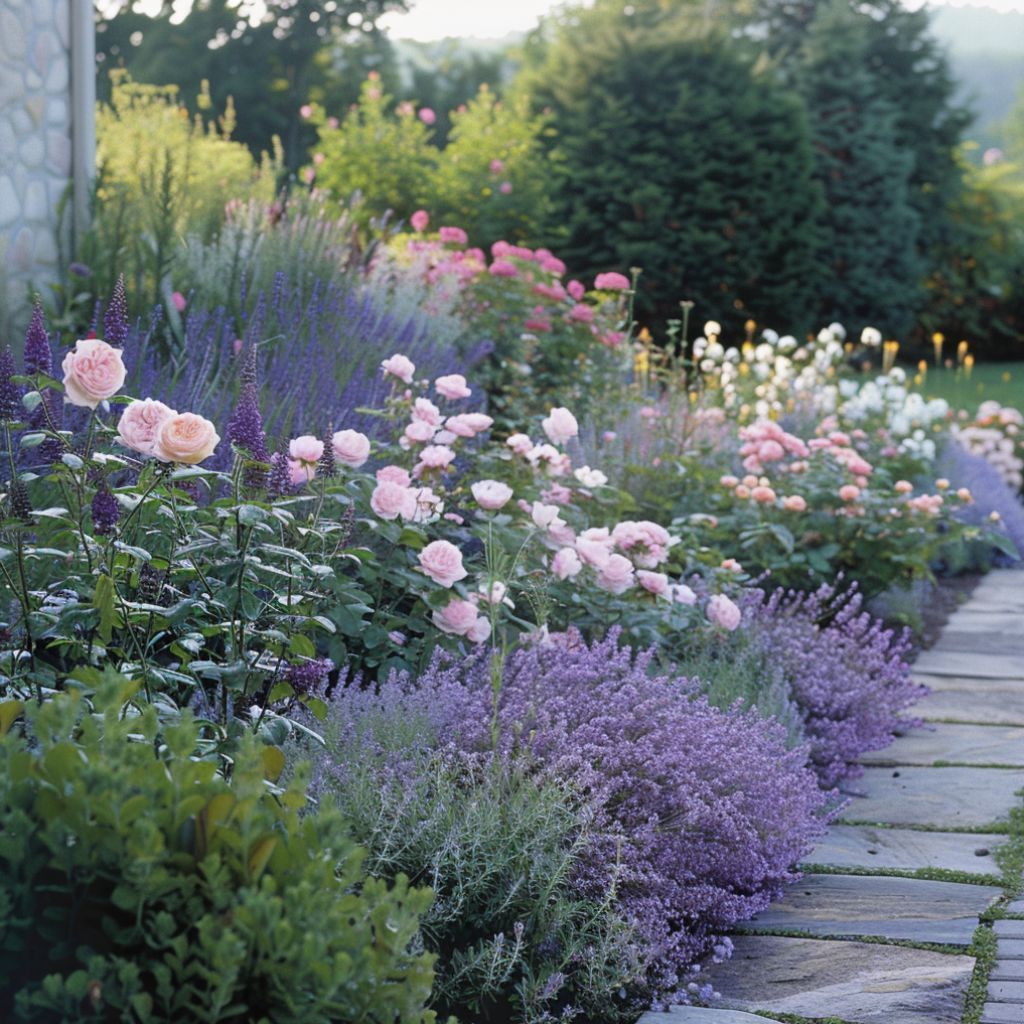
A rose planted alone in a bed of bare mulch is doing more work than it should. The soil dries out faster, the bare canes look stiff and bare-legged, and pest pressure tends to be higher than it has to be. A few well-chosen companions at the rose's feet solve all three problems quietly, and make the planting better to look at in the bargain.
We start with lavender. The classic pairing exists for good reason: lavender's silver foliage cools the visual heat of a rose in full bloom, the loose flower spikes pick up where the rose leaves off, and the strong oils seem to discourage some of the soft-bodied pests roses attract. Plant lavender twelve to eighteen inches out from the base of the rose, where it will get the sun it needs without competing for root space.
Catmint (Nepeta) does a similar job with a softer, longer-blooming profile. It mounds into a loose blue-purple cloud that disguises the bare lower canes of most roses and keeps blooming reliably from June through frost. It's also one of the easier perennials we grow — drought tolerant, deer resistant, and almost impossible to kill.
For pollinators and a long season of color, we love hardy geraniums (the true Geranium, not pelargoniums). The smaller varieties weave between rose stems without smothering them, the flowers are bee magnets, and the foliage stays presentable from spring through fall.
Salvias — both the perennial garden salvias and the annual culinary types — bring the kind of dark, saturated purple and blue that makes pink and apricot roses look richer. They flower in the same flush rhythm as repeat-blooming roses, so the pairings tend to peak together.
For something quieter, plant alliums through the bed. The early-summer drumstick alliums (Allium sphaerocephalon) come up between the rose canes, bloom with the first rose flush, and disappear back into the soil without any fuss. Garlic chives do similar work later in the season and may help discourage aphids.
What we avoid: heavy feeders that compete directly with the rose for nutrients (no thirsty annuals in big clumps), tall plants that shade the rose's basal canes (those need light to push new growth), and anything aggressive enough to crowd the root zone. Roses want air, sun, and space; the right companions accent the planting without taking from it.
Done well, a rose bed stops looking like a collection of roses and starts looking like a garden — fuller, calmer, and easier to maintain than the bare-mulch version it replaced.