Roses
Bare root vs. potted roses: why we ship bare root
February 2026 · 5 min read
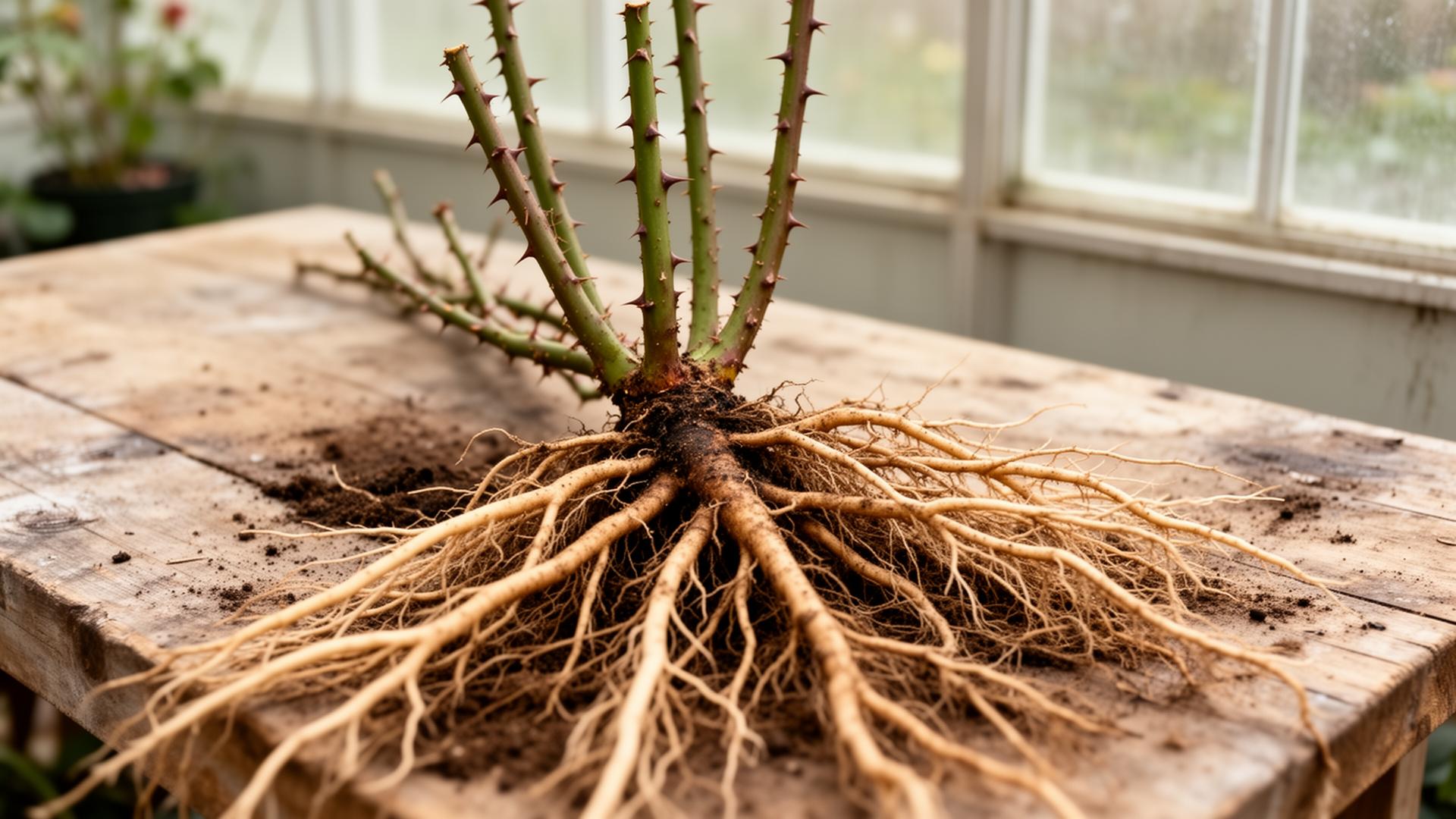
Whenever we talk about why we ship bare root, we want to be careful about something: a potted rose from a good nursery is a wonderful plant. They offer instant presence in the garden, a flexible planting window that stretches well into summer, and the simple comfort of seeing leaves and stems before you commit. For a lot of gardeners, that's the right choice. We are not in the business of telling you otherwise.
That said, when we look at the long arc of a rose — five, ten, twenty years in the same spot — bare root has advantages that quietly compound. A bare root plant ships dormant, with its root system free of a pot, and goes directly into your native soil. Yes, it was grown in a field at the nursery first — bare root doesn't mean the plant has never seen dirt — but it skips the long stretch in a confined container, and there's no circling root to untangle when you plant it out.
Bare root plants also tend to be younger, which sounds like a drawback and isn't. Young roses adapt. Their root systems orient themselves to your particular site — your wind, your drainage, your winter — instead of carrying the habits of a pot. Three seasons in, a bare root rose has often caught up to or passed a potted plant of the same variety planted at the same time, with a healthier root system to show for it.
Selection is the advantage that surprises most gardeners. Many of the varieties we love — heirloom Austins, rare ramblers, own-root specialty roses, the deep catalog of European and Canadian breeders — simply aren't available potted at any meaningful scale. Bare root is how you get access to the actual rose you want, not just the dozen varieties that happen to ship well in a five-gallon pot.
The planting window is narrower, but it works in the plant's favor. Bare root roses go in the ground in late winter or very early spring, while they're still dormant and the soil is cool and moist. That gives the root system weeks to wake up and push new growth before the plant is asked to support leaves, flowers, and summer heat all at once. A potted rose planted in June is doing all of that on the same day. By midsummer, a well-sited bare root plant is often the more established of the two.
There's also a quieter benefit on the disease and pest side. A bare root plant arrives with its roots washed and inspected, no nursery potting mix riding along. That meaningfully lowers the risk of importing soil-borne issues you didn't ask for — jumping worms, fungal pathogens, weed seed, the occasional grub — into a bed you've spent years building up. It's not a guarantee, but it's a cleaner start.
There is less plastic, less weight to ship, and a much smaller carbon footprint per plant — which means we can offer a wider, more specialty selection without the logistics of trucking heavy pots across the country.
Price is the other quiet advantage. A bare root rose typically lands at roughly half the cost of the same variety potted — sometimes less. You're not paying for the pot, the potting mix, a season of nursery labor, or the freight to ship a heavy container across the country. For gardeners planting a hedge, a cutting row, or a whole new bed, that difference adds up fast: the bare root budget that buys you six potted roses will often plant a dozen, with money left for mulch and a good pair of gloves.
The trade-off is patience and timing. Bare root roses ship in a narrow late-winter and early-spring window, while the plant is still dormant. You'll plant a stick with roots, water it in, and wait — sometimes weeks — for the first leaves to push. It asks a small leap of faith. We think it's worth it. But if your garden needs something to look at this weekend, a good potted rose from a local grower is a fine answer too. Both can lead to the same place: a rose you'll still be visiting in twenty years.