Dahlias
A field note on dahlia season
April 2026 · 4 min read
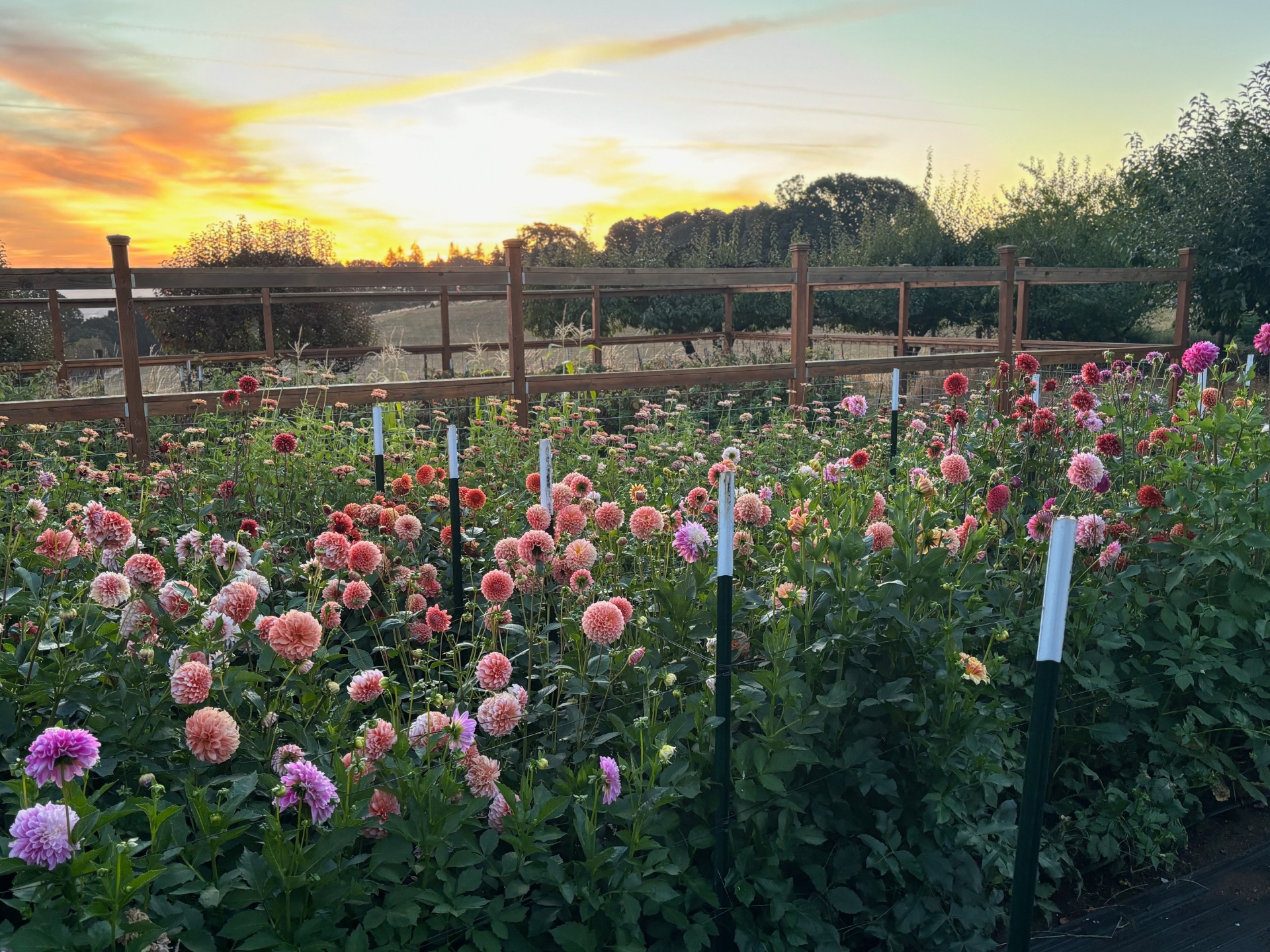
Dahlia season on our farm begins in the quiet weeks after the last spring frost, when the tubers go into warm soil and we start counting days until the first bloom. By August the rows are shoulder-high and the work shifts from planting to tending — staking, pinching, and the small daily decisions that decide how long the season runs.
We stake early. A simple grid of T-posts and twine, set when the plants are knee-high, saves hours of triage after the first late-summer storm. Dahlias are heavy-headed and hollow-stemmed; without support, a single windy afternoon can flatten a row that took months to grow.
Pinching is the other quiet investment. When a plant has four sets of true leaves, we snip out the central growing tip just above the third pair. It feels counterintuitive — you are cutting away the first flower — but the plant responds by branching low and producing far more stems, with longer, straighter necks for cutting.
Once the blooms start, we pick deep and pick often. Dahlias are a cut-and-come-again flower: every stem you take encourages two more behind it. We cut in the cool of the morning, plunge the stems straight into water, and leave the buds that are still tight on the plant — dahlias don't open much after cutting, so the open or half-open bloom is the one to take.
By October the light has softened and the colors deepen. We let the last blooms stand for the bees, then wait for a hard frost to blacken the foliage before we lift, divide, and store the tubers for next year. The season is short, but it is generous — and the rhythm of it is one of the best parts of growing.